
Antarctica is the most expensive trip most people will ever take, and the one where the brochure tells you least about what you are actually buying. Two ships advertising “Antarctica” can deliver completely different holidays — and on one of them you may never set foot on the continent at all.
That is not a trick. It is a rule. Understanding it is the single most useful thing you can do before you start comparing itineraries.
The rules that decide what your trip can be
Antarctic tourism is self-regulated through IAATO, the International Association of Antarctica Tour Operators, working under the Antarctic Treaty system. Four of its rules shape every decision you will make:
- “No more than 100 passengers exclusive of expedition staff may be ashore at any site at any one time.” That is the number that governs everything else.
- One guide ashore for every 20 passengers ashore.
- No more than one ship at a landing site at a time. Sites are booked between operators, not first-come.
- “Vessels carrying over 500 passengers are not permitted to land tourists under IAATO’s Bylaws.” Those ships are, in IAATO’s own phrase, cruise-only.
IAATO sorts vessels into categories: yachts up to 12 passengers, Category 1 at 13–200, Category 2 at 201–500, and cruise-only above 500. Category 2 ships also face additional restrictions on which sites they may use.
Landing ship or scenic ship? Settle this first
A cruise-only Antarctic voyage means a large ship sails the peninsula and you watch it from the deck. It can be genuinely spectacular — the scenery is the point, and you get a comfortable ship with everything a big ship offers. Princess, for instance, is bringing the 3,560-guest Majestic Princess to the peninsula for scenic sailings across the 2026–27 season on itineraries of fifteen to thirty-three days. Nobody aboard will land.
An expedition voyage puts you in a Zodiac and onto the ice. That requires a ship under the 500-passenger threshold, and in practice most are far smaller: Ocean Nova carries 80, Antarctica21’s Magellan ships 76, Quark’s Ocean Explorer 138 and World Voyager 168, Silversea’s Silver Endeavour 220 guests to 207 crew, and HX’s Roald Amundsen and Fridtjof Nansen 500 each.
The practical consequence of the 100-ashore rule: on a ship carrying 200 or more, landings run in rotation and part of the ship waits its turn. On a ship carrying around 100 or fewer, everybody can be ashore at once. That difference — not the cabin, not the food — is what you are really buying when you pay more for a smaller ship.
The Drake Passage, or fly over it
The classic route sails from Ushuaia across the Drake Passage: roughly 500 miles and about 48 hours each way. Travellers talk about the “Drake Lake” and the “Drake Shake,” and both are real — crossings range from glassy to swells above eight metres. Two full days at sea in each direction is a meaningful share of a ten-day trip, though many people find the seabird watching and the lecture programme genuinely enjoyable rather than something to be endured.
The alternative is a fly-cruise: a charter flight from Punta Arenas in Chile to King George Island in the South Shetlands, where you board the ship. Verified operators of this product include Antarctica21, whose six-day Antarctica Express uses its 76-guest Magellan ships with a roughly two-hour flight and a pre-cruise night in Punta Arenas; Quark Expeditions, whose eight-day Antarctic Express charters both directions; and Polar Latitudes, which is launching a fly-cruise on the 80-guest Ocean Nova for the 2027–28 season.
The trade-offs are real in both directions. Flying removes four days at sea and can cut door-to-door travel from around five or six days to three or four. It also costs more — Quark’s eight-day fly-cruise carries a higher lead-in fare than its eleven-day sailed voyage, so you are paying more for a shorter trip. Charter flights to King George Island are weather-dependent and delays happen, and they carry strict baggage limits. Confirm the baggage allowance and the operator’s delay policy in writing before booking a fly-cruise — those two terms differ by operator and are not always prominent.
Gateways, and getting there from St. Louis
Ushuaia, at the southern tip of Argentina, is the dominant departure port for sailed voyages. Punta Arenas in Chile is the fly-cruise gateway. Some operators assemble guests in Buenos Aires and charter them onward to Ushuaia. The Ross Sea, a different and far longer proposition, sails from Bluff in New Zealand.
From the Midwest the realistic routing is a US hub to Buenos Aires — American from New York, Miami or Dallas, Delta from Atlanta, or LATAM via Lima or Santiago — then a domestic flight of about three and a half hours to Ushuaia. For a fly-cruise it is a US hub to Santiago, then Punta Arenas.
Build in at least one night, and preferably two, before embarkation. No operator makes this a contractual requirement, but it is the closest thing to one in practice: this is a trip where a missed connection cannot be fixed by catching the ship at the next port, because there is no next port. Our travel insurance guide covers the cover you actually need for a trip structured like this.
When to go
The season runs roughly mid-November to early March, and the months are genuinely different trips.
- November. Ice and snow at their most pristine, glaciers intact before the summer break-up, colonies busy with courtship and nest-building, seals establishing territories. Dramatic long sunsets, the fewest visitors, and untouched landing sites.
- December and January. Peak season. The longest daylight, chicks hatching, and the thicker ice beginning to melt out — the most reliable window and the busiest.
- February. Chicks growing fast, sea ice receded enough for deeper exploration including the Weddell Sea, around eighteen to twenty hours of daylight, and leopard seals seen more often. February also marks the start of the peak whale-watching period, with humpback, minke and orca feeding in numbers.
If wildlife is the priority, late season. If landscape and ice are the priority, early season. Both are defensible; there is no single best month.
Itinerary types
| Itinerary | Typical length | What it adds |
|---|---|---|
| Fly-cruise peninsula | 6–8 days | Skips the Drake entirely; the shortest way to stand on the continent |
| Classic peninsula and South Shetlands | 10–12 days | The standard trip. Two Drake crossings, five or six landing days |
| Crossing the Antarctic Circle | 11 days flying / 14 sailing | Pushes south to Marguerite Bay and the research stations |
| Peninsula in depth, including the Weddell Sea | ~20 days | More landings, more ice, fewer other ships |
| Falklands, South Georgia and the peninsula | ~20 days | King penguin colonies at scale; the classic wildlife voyage |
| South Georgia plus the Antarctic Circle | ~23 days | The comprehensive option |
| Ross Sea | ~28 days | Scott’s and Shackleton’s huts, McMurdo, the Ross Ice Shelf. From New Zealand |
South Georgia is the big decision. Adding it turns a ten-to-twelve-day trip into roughly twenty, and the fare roughly doubles. For most first-time travellers the classic peninsula voyage is the right answer; South Georgia is what you come back for. One current caveat worth knowing: South Georgia has had rolling landing-site closures because of avian influenza, the site list changes and cannot be predicted in advance, and operators substitute Zodiac cruising or additional days elsewhere when a site is shut.
The operators, and how they differ
Broadly, the market splits into classic expedition companies and luxury lines running expedition ships. Both land you in the same places under the same rules; what differs is the ship, the service and the price.
- Quark Expeditions — the broadest programme, from eight to twenty-three days. Ultramarine carries twin helicopters. Fly-the-Drake and Circle fly-cruises. Parka is yours to keep.
- Antarctica21 — the fly-cruise specialist, purpose-built 76-guest ships, six-day trips.
- HX (formerly Hurtigruten Expeditions) — Roald Amundsen and Fridtjof Nansen at 500 guests, Fram at 200, with a free onboard citizen-science programme.
- Silversea — Silver Endeavour, 220 guests to 207 crew, butler service in every suite. The luxury end of true expedition.
- Viking — a thirteen-day Buenos Aires to Ushuaia voyage with kayaks, Zodiacs and Special Operations Boats at no extra charge and an onboard science programme.
- Oceanwide Expeditions — basecamp-style voyages with camping, diving and mountaineering. Classic expedition, minimal polish.
- Aurora Expeditions — X-BOW hulls and unusually clear published fitness and age policies.
- Heritage Expeditions — the Ross Sea specialist.
- Poseidon Expeditions and Polar Latitudes — small-ship classic expedition operators.
Lindblad–National Geographic, Ponant, Scenic, Seabourn, Atlas, Swan Hellenic, Albatros, Intrepid and G Adventures also operate in the region. We will compare any of them against your dates — the right answer depends far more on ship size, cabin and departure date than on brand.
What is included, and what is not
Expedition fares are more inclusive than mainstream cruise fares, and the pattern is consistent across operators. Typically included: an expedition parka, often yours to keep; waterproof boots on loan; all Zodiac operations and shore landings; all meals, with beverages and some alcohol; the full lecture and expedition-team programme; and, on fly-cruises, the charter flights and a pre- or post-voyage hotel night with breakfast.
Typically extra: international airfare, insurance, gratuities, excess baggage, and waterproof over-trousers — which people are surprised by, because the parka is included and the trousers usually are not. Optional adventure activities are priced separately and are not cheap: Quark’s 2026–27 rates list sea kayaking at $1,995 and guided photography at $1,595 for the voyage.
Insurance is not optional here
Most operators contractually require evacuation and repatriation cover, and they name a figure. Poseidon Expeditions requires polar-region cover with evacuation and repatriation of no less than US$200,000 per person; HX makes medical-evacuation cover mandatory and recommends the same $200,000 minimum. Note the distinction — one requires it, the other recommends it, and this is separate from trip-cancellation cover. Check your operator’s specific wording, and check that your policy actually names Antarctica rather than excluding it.
How physically demanding is it?
Aurora Expeditions puts it well: you do not need to be an athlete, but for landings you must be confident on your feet, able to manage a gangway equivalent to a steep set of stairs, able to board a Zodiac from a moving platform, and able to walk across wet, snowy or rocky ground. Crew offer an arm; they cannot carry you.
Landings are optional — you can skip any of them and stay aboard. Age policies vary: Aurora sets a minimum of six with no upper limit and has carried guests in their nineties; Oceanwide sets a minimum of three and advises against under-eights. Most operators require a medical form, often forty-five to ninety days before departure, and some voyages require a doctor’s sign-off.
Wildlife — what is realistic
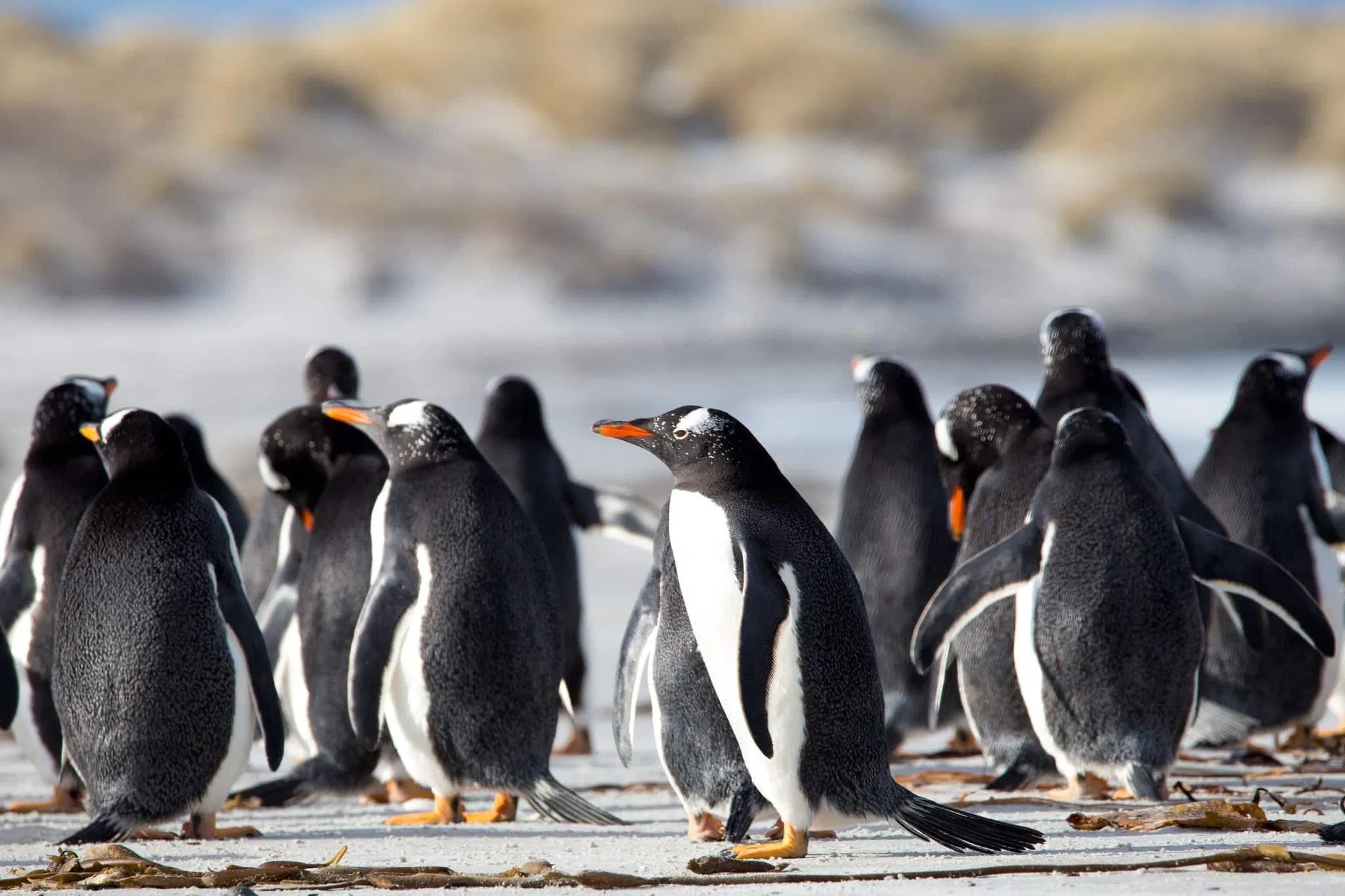
Set expectations by month and by geography rather than by species list. On a peninsula voyage, gentoo, chinstrap and Adélie penguins are the common species, with seals hauled out on ice and beaches. Humpback, minke and orca are seen from December, with February onwards the strongest whale period. King penguins at scale are a South Georgia proposition, not a peninsula one. Emperor penguins require a specific Weddell Sea itinerary on an icebreaker and are a different, considerably more expensive trip.
Nothing is guaranteed, and that is not a disclaimer — it is how the destination works. Landings depend on weather, ice and sea state; sites can close at short notice for biosecurity reasons, as South Georgia’s avian-influenza closures have shown. A good expedition leader changes the plan daily and the changes are usually improvements. Book the voyage for the place and the season, not for a particular animal.
What it costs — the shape, not the sticker
Exact fares move constantly with promotions and cabin inventory, so the useful thing is the structure.
- Within one voyage, the spread from the cheapest shared cabin to the top suite is roughly 1.8 times. On a classic eleven-day peninsula trip that has recently meant roughly $13,500 at the bottom and $24,800 at the top.
- Adding South Georgia roughly doubles the entry price for about nine extra days. A twenty-day Falklands, South Georgia and peninsula voyage starts around where a classic peninsula voyage’s top suites end.
- Fly-cruises cost more per day, sometimes more per trip, despite being shorter. You are buying back four days of your life.
- Specialist icebreaker itineraries — emperor penguins, deep Weddell Sea — are a different price class again, and can run past $50,000 per person at the top end.
Because the spread within a single sailing is so wide, the cabin decision often matters more to the total than the operator decision. Our guide to choosing a cabin applies here in an unusual way: on an expedition ship you will spend far less time in it than you expect.
Who Antarctica is not for
It is the wrong trip if you want warmth, a pool deck, nightlife, shopping, or a schedule you can rely on. It is the wrong trip if two days of open-ocean crossing each way would ruin the holiday and the fly-cruise premium is out of reach. And it is the wrong trip if you cannot manage a Zodiac and uneven ground — you can still go, but you will watch a good deal of it from the ship.
It is the right trip if you want the least-visited place on earth, a small ship, and a week where the plan changes every morning because the ice moved. Our expedition cruise guide covers how expedition travel works more broadly, and ocean versus river versus yacht versus expedition is the right starting point if you are not yet sure this is the format you want.
Plan an Antarctica voyage with us
Antarctica rewards early booking more than any destination we sell — the small ships, the good cabins and the popular February departures go a year or more ahead, and the difference between a well-chosen sailing and a badly chosen one is very large at this price. Tell us your dates, whether the Drake is a dealbreaker, and whether wildlife or landscape matters more, and we will shortlist the sailings that fit.
We compare available supplier offers, agency promotions and added amenities to help you find strong overall value. Planning fees are $0. Fares, inclusions and departures vary by operator and sailing; landings are always subject to weather, ice and site conditions.
Start with the Where2Next survey, or search available sailings.
The other great expedition destination works on an entirely different set of rules — fixed park-approved itineraries, certified naturalist guides and a 100-passenger cap. Our Galápagos cruise guide covers how to choose a vessel, a loop and a season.
Antarctica cruise FAQs
Do all Antarctica cruises actually land on the continent?
No, and this is the most important thing to check before booking. Ships carrying more than 500 passengers are not permitted to land anyone under IAATO’s bylaws — they are cruise-only, scenic sailings. If setting foot on Antarctica matters to you, you need a ship under that threshold, and preferably one carrying around 100 or fewer so that everyone can be ashore at once.
How long does the Drake Passage take?
About 48 hours in each direction, roughly 500 miles. Conditions range from remarkably calm to swells above eight metres, and you cannot know which you will get. If that is unacceptable, a fly-cruise from Punta Arenas to King George Island removes both crossings.
Is a fly-cruise worth the extra cost?
It buys back roughly four days and removes the crossing risk, and it costs more for a shorter trip. It is clearly worth it if you have limited time or serious concerns about seasickness. It is worth less if you have the days available, because many travellers end up enjoying the crossing. Note that charter flights are weather-dependent and carry strict baggage limits.
When is the best month for Antarctica?
November for pristine ice, active courtship and the fewest ships. December and January for peak conditions, chicks and the longest daylight. February for whales, the deepest exploration as the ice recedes, and around twenty hours of light. There is no single best month — it depends whether you are going for wildlife or for landscape.
How fit do I need to be?
Reasonably. You need to manage a steep gangway, board a Zodiac from a moving platform, and walk on wet, snowy and uneven ground. You can skip any landing. Operators publish minimum ages — often six, sometimes three — and most require a medical form some weeks before departure.
Do I need special insurance?
Yes, and it is usually contractual rather than advisory. Operators commonly require evacuation and repatriation cover with a stated minimum — US$200,000 per person is the figure Poseidon requires and HX recommends. Confirm your policy names polar travel rather than excluding it, and treat cancellation cover as a separate purchase.
Will I definitely see penguins and whales?
Penguins, in season, are near-certain on a peninsula landing voyage — you will be visiting colonies. Whales are likely from December and most reliable from February. Nothing is guaranteed: landings depend on weather, ice and site availability, and sites occasionally close for biosecurity reasons at short notice.
Is South Georgia worth adding?
It is extraordinary, and it roughly doubles both the length and the fare. For a first Antarctic voyage the classic peninsula trip is usually the better call; South Georgia is the return trip. Be aware that avian-influenza closures have made specific landing sites unpredictable there.
How far ahead should I book?
A year or more for the small ships, the better cabins and peak departures. Antarctica is capacity-constrained by design — the site rules limit how many people can be ashore — so it does not behave like a mainstream cruise where availability reappears close in.