
Expedition cruising does not work like the rest of the cruise market. The newest ship is not automatically the best one, and the lowest fare is frequently the worst value. What determines your trip is the operator, the passenger count, the strength of the expedition team, how many landings you actually get, and whether the activities you care about are included or sold separately.
This guide covers what expedition cruising is, the major regions, how ships and operators differ, what it costs, and who should not book one. If you already know your destination, it will help you choose an operator. If you do not, it will help you choose between Antarctica, the Arctic and the Galápagos — which are far less interchangeable than the brochures suggest.
What an expedition cruise actually is
An expedition cruise uses a small, purpose-built or ice-strengthened ship to reach places conventional cruise ships cannot meaningfully access. The ship is your base; the expedition program is the product. You travel ashore by Zodiac, walk on uneven ground, attend naturalist briefings, and accept that the day’s plan changes with weather, ice and wildlife.
That last point is the cultural difference. On a conventional cruise, a changed itinerary is a disappointment. On an expedition, it is the operating model. The captain who reroutes around fast ice or holds position for a whale encounter is doing the job correctly.
For how expedition sits against other cruise formats, see our comparison of ocean, river, yacht and expedition cruising. This guide assumes expedition is the direction and gets into the detail.
Why expedition ships are small — the rules behind it
Travelers often assume small ships are a marketing choice. In the polar regions they are a regulatory requirement, and understanding the numbers explains most of what you will pay for.
In Antarctica, IAATO’s operating standards limit visitors ashore to no more than 100 passengers at any one site at any one time, prohibit landings altogether from ships carrying more than 500 passengers, prescribe a 1:20 guide-to-visitor ratio, and allow only one ship at a site at a time.
In Svalbard, regulations effective 1 January 2025 restrict landings in protected areas to 43 designated sites — some capped at 39 guests at a time — and bar vessels carrying more than 200 passengers from those areas entirely. Polar bear approach distances are set at 300 metres from 1 July to 28 February and 500 metres from 1 March to 30 June, with 150 metres from walrus haulouts and drones banned in national parks.
The practical translation: a 500-passenger ship in Antarctica means everyone rotates through landings in shifts, or nobody lands at all. A 200-passenger ship in Svalbard cannot enter the protected areas where the wildlife is. Passenger count is not a comfort preference — it determines whether you get ashore. This single fact should drive your shortlist more than any brochure photograph.
Which region is right for you?
| Destination | Best for | Season | Typical length | Considerations |
|---|---|---|---|---|
| Antarctica | Penguins, ice, whales, dramatic landscape | November–March | 10–23 days | Drake crossing, Zodiacs, uneven terrain |
| Arctic / Svalbard | Polar bears, walrus, sea ice | May–September | 7–14 days | Cold, Zodiac transfers, strict wildlife rules |
| Galápagos | Wildlife, snorkeling, hiking | Year-round | 7–10 days | Heat, wet landings, park permits |
| Greenland | Ice fjords, Inuit culture | June–September | 10–15 days | Remote ports, limited infrastructure |
| Iceland | Volcanic landscapes, coastal geology | May–September | 7–12 days | More conventional port access |
| Canadian Arctic | Northwest Passage, history | July–September | 14–25 days | Long sea days, genuinely remote |
| South Georgia & Falklands | Vast penguin colonies, exploration history | November–March | 18–23 days | More sea days, materially higher cost |
Antarctica
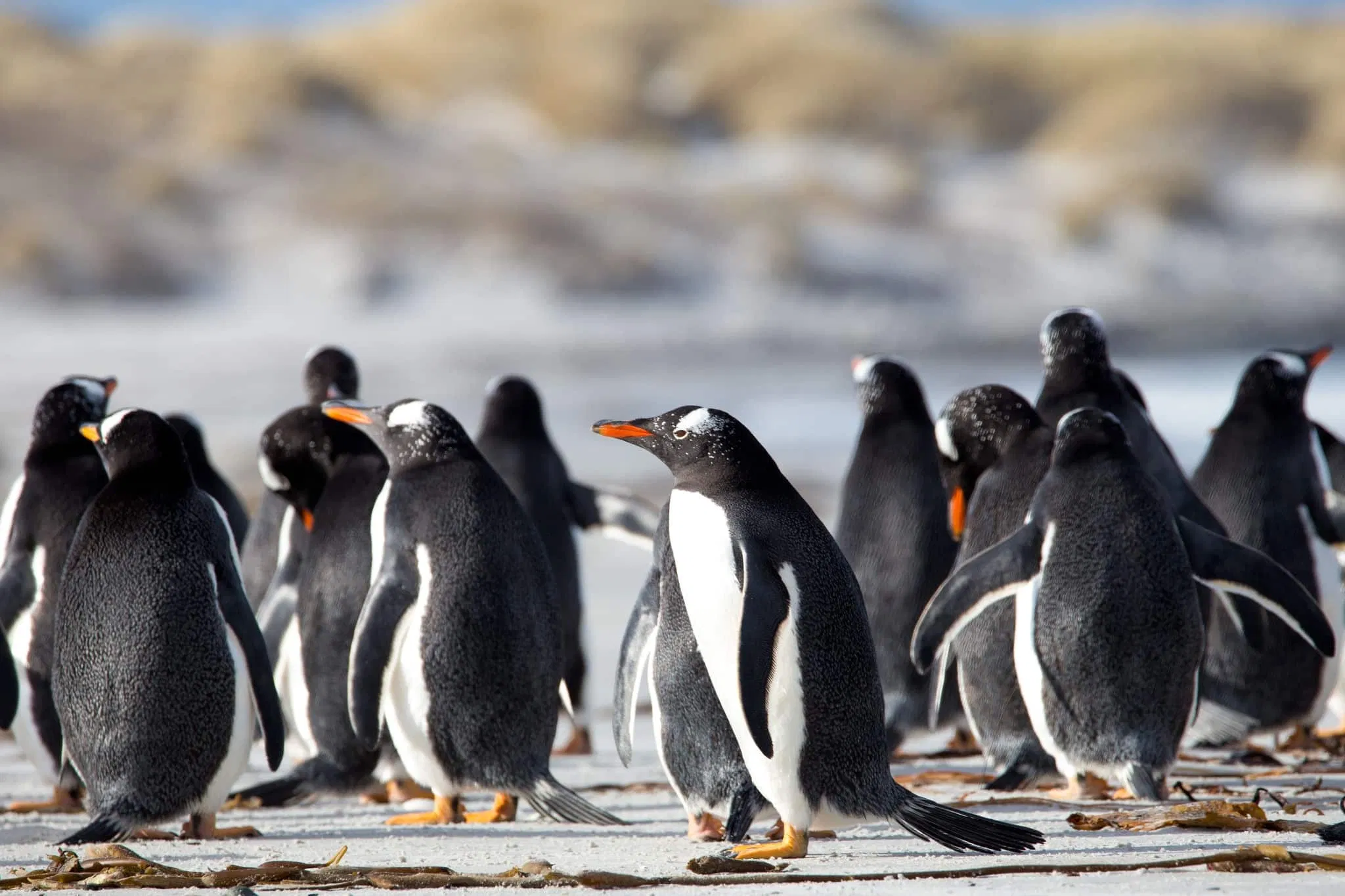
The right choice if penguins, ice, whales and seals are the point. Most first voyages focus on the Antarctic Peninsula and the South Shetland Islands, typically 10 to 12 days including the Drake Passage crossings.
South Georgia and the Falklands are the reason to book a longer voyage. South Georgia’s king penguin colonies are on a scale nothing on the Peninsula matches, and the Shackleton history is genuinely moving. The trade-off is real: substantially more sea days and substantially more money.
Antarctic Circle and circumpolar routes appeal to repeat travelers. They are longer, more weather-dependent and more expensive. Choose them for the expedition program, not for the line on the map.
The Drake Passage, and whether to fly it
Roughly 500 miles between southern South America and the Peninsula, usually about two days each way. You will hear “Drake Shake” and “Drake Lake.” Neither is predictable and there is no reliably calm month.
| Sail the Drake | Fly-cruise | |
|---|---|---|
| Time | Four days of transit | Two hours each way |
| Seasickness | Full exposure to open ocean | Avoided |
| Cost | Lower | Usually significantly higher |
| Risk | Rough seas | Weather-delayed or cancelled flights |
| Experience | Albatrosses, lectures, a genuine sea passage | Maximum time in Antarctica |
Fly-cruise programs generally charter from Punta Arenas to King George Island. They remove the crossing but add flight risk — King George Island weather closes regularly, and a delay can compress or disrupt the voyage. Build buffer days at both ends and follow the operator’s required arrangements exactly. If seasickness is a genuine concern, the flight is worth the money. If it is mild anxiety, medication and a low central cabin usually solve it for less.
The Arctic and Svalbard
Choose the Arctic if polar bears, walrus, sea ice and human history matter more than penguins. Svalbard voyages usually operate from Longyearbyen, sometimes linking Iceland and Greenland.
Set expectations honestly on wildlife. The 2025 approach-distance rules mean bear sightings are now generally at 300 to 500 metres. You will want long lenses and good binoculars, and photographs will look different from the images that sold you the trip. Operators cannot bend these rules, and one that implies otherwise is telling you something untrue.
| If you want… | Go to |
|---|---|
| Penguins | Antarctica |
| Polar bears and walrus | Arctic |
| Icebergs and mountain scenery | Antarctica |
| Inuit communities and human history | Arctic and Greenland |
| Shorter travel time from Europe | Arctic |
| Warm-weather wildlife | Neither — Galápagos |
Galápagos
A different proposition entirely: naturalist-guided hikes, snorkeling, sea lions, tortoises and volcanic landscapes, with no cold-weather gear required. Ships are small — often much smaller than polar vessels — and itineraries are governed by Galápagos National Park permits, so island sequences are fixed in advance and can change without notice.

Budget for the entry costs. The Galápagos National Park entrance fee for foreign adults is $200, doubled from $100 in August 2024, plus a $20 Transit Control Card purchased before your flight from mainland Ecuador. Packages often bundle mainland hotel nights, domestic flights, transfers, park fees, meals, guided excursions and snorkel gear — but international airfare usually sits outside. Confirm the fee treatment for your specific package rather than assuming.
The Galápagos is also the most family-viable of the three regions. Warm water, short walks, snorkeling and constant visible wildlife hold children’s attention in a way that four days of Drake Passage does not.
How the operators differ
Rather than ranking brands, match the operator to what you want out of the trip.
| Your priority | Operators to compare |
|---|---|
| Luxury with a serious expedition program | Silversea, Seabourn, Scenic Eclipse, Ponant |
| Naturalists, photography, science | Lindblad Expeditions–National Geographic |
| Polar depth and active programming | Quark, Aurora, HX |
| First expedition, comfortable and structured | Silversea, Seabourn, Viking, Lindblad |
| Smaller ships and more intimate groups | Aurora, Quark, Ponant |
| Galápagos specifically | Lindblad–National Geographic, Silversea |
| Expedition focus at a lower fare | Atlas, selected HX and Quark sailings |
Silversea and Seabourn deliver suites, dining and service without giving up the expedition program — the usual choice for travelers who want Antarctica but not roughing it. Lindblad is built around interpretation: naturalists, photographers and science rather than entertainment, and it is the strongest choice if learning is the point. HX is expedition-forward and casual, with heavy science and sustainability programming. Ponant brings a French luxury style and an international guest mix. Scenic Eclipse sits at the ultra-luxury end; helicopters and submersibles appear on selected ships and itineraries but are not universal — confirm availability, reservation rules and weather limitations before you build a trip around them. Quark and Aurora are polar specialists where expedition quality outranks onboard spectacle. Viking operates purpose-built expedition ships with science facilities and Nordic design. Atlas offers a yacht-style expedition at a more approachable luxury position.
Ship deployments, itineraries and inclusions for 2027 and 2027–28 change regularly. Confirm the specific ship, route and included activities for your exact departure rather than relying on any published summary, including this one.
What is included, and what is not
Expedition fares are high, and inclusions are wide but uneven. Generally included: shore landings and Zodiac cruising, the full expedition team and lecture program, and on polar voyages usually a loaner parka and rubber boots.
Frequently not included, and worth confirming individually: kayaking, camping, snowshoeing, stand-up paddleboarding, helicopter flightseeing, submersible dives, premium beverages, and the mandatory medical evacuation insurance most polar operators require. Any one of these can add four figures per person, and “adventure options available” in a brochure usually means “available at extra cost, subject to weather and capacity.”
What it costs, and why comparing fares fails
Expedition cruising is the most expensive mainstream cruise category per night, and the widest in what that money buys. Two Antarctica voyages at similar fares can differ enormously in landings per day, guide ratio, activity inclusions and how much of the trip is at sea rather than in the ice.
Build the whole number: voyage fare, international flights, the required pre-voyage hotel night in Ushuaia or Punta Arenas (operators generally mandate this and they are right to), charter flights on fly-cruise programs, mandatory evacuation insurance, optional activities, gear you need to buy, park and entry fees, and gratuities.
Then compare on the metrics that actually shape the experience: passengers carried, landings per day, guide ratio, days in the region versus days in transit, and which activities are included rather than sold. A cheaper voyage that lands twice a day beats a pricier one that lands once.
Travel protection deserves particular attention here. Most polar operators require evidence of emergency medical evacuation cover with a high minimum, because evacuation from the Antarctic Peninsula is neither quick nor cheap. This is not a policy to buy on price.
Physical demands and accessibility
You do not need to be an athlete, but you do need to be steady. Expect to climb down a gangway into a moving Zodiac, step into shallow water on a wet landing, walk on loose rock, snow and uneven ground, and manage yourself in cold, wet, windy conditions.
Operators vary enormously in how they accommodate limited mobility, and some landings are simply not adaptable. Raise it before booking, not after. The honest answer is sometimes that a particular voyage will not work, and it is far better to hear that in advance.
Who should not book an expedition cruise
- Anyone who wants shows, casinos, nightlife or a resort-style ship
- Anyone who needs a guaranteed itinerary — conditions rewrite the plan regularly
- Anyone expecting guaranteed wildlife sightings. No operator can promise a polar bear
- Travelers with mobility limitations that make Zodiac transfers unsafe
- Families with young children on polar itineraries, where long sea days and cold landings test patience
- Anyone shopping primarily on fare, because the cheapest expedition voyage is rarely the cheapest way to see the region well
Booking timelines
Expedition books further ahead than anything else in cruising. Antarctica typically sells 12 to 24 months out, and the best cabins and the departures with the strongest itineraries go first.
The market is currently running ahead of that. Quark opened its 2027 Arctic and 2027–28 Antarctica seasons on 21 October 2025 — earlier than planned, citing strong demand. If you are considering 2027 or 2028, you are not early.
Get the comparison right before you commit
Expedition cruising is the category where the difference between a good booking and a poor one is largest, and where the brochure tells you least. Cruise Planners – Neal Lewis & Associates can compare operators on the things that decide the trip — passenger count against the landing rules, guide ratios, included versus optional activities, days actually in the region, and the insurance each operator requires — rather than on fare alone. There is no planning fee.
Request rates and information with your region, dates and travel party. For a wider view of where expedition sits in the market, see our cruise line comparison, browse the cruise guides, or search sailings with the Advanced Cruise Search.
Two destinations now have guides of their own: Antarctica, where the IAATO rules decide whether your ship can land at all, and the Galápagos, where every itinerary is fixed in advance by the national park. Both are the deep versions of what this guide covers.
Frequently asked questions
Why are expedition ships so small?
Regulation. In Antarctica, IAATO standards bar landings from ships carrying more than 500 passengers and cap shore parties at 100 people per site. In Svalbard’s protected areas, vessels over 200 passengers are excluded outright. Ship size determines shore access.
Should I sail or fly the Drake Passage?
Fly if seasickness is a genuine medical concern or your time is tightly limited. Sail if you are reasonably tolerant of open ocean — it is cheaper, it avoids flight-cancellation risk, and the crossing itself is part of the experience.
Antarctica or the Arctic?
Antarctica for penguins, icebergs and dramatic scale. The Arctic for polar bears, walrus and human history, with shorter travel time from Europe. They are not substitutes for one another.
Are parkas and boots included?
Usually on polar voyages — commonly a parka you keep and boots on loan. Confirm per operator, and check whether waterproof trousers are included, since they often are not.
Is kayaking included?
Usually not. Kayaking, camping, snowshoeing, paddleboarding, helicopters and submersibles are typically optional extras with limited capacity and weather restrictions. Book them when you book the voyage.
Will I definitely see polar bears or penguins?
Penguins in Antarctica in season are close to certain — the colonies are fixed and enormous. Polar bears are not guaranteed. No responsible operator promises a specific sighting, and Svalbard’s approach-distance rules mean sightings are typically at 300 to 500 metres.
Do I need special insurance?
For polar voyages, almost always. Most operators require proof of emergency medical evacuation coverage at a high minimum. Check the requirement before you buy any policy.
Is the Galápagos good for families?
Often the best of the three regions for families. Warm water, snorkeling, short walks and wildlife that is constantly visible and unafraid of people.
How far ahead should I book?
Twelve to twenty-four months for Antarctica. The 2027 and 2027–28 seasons opened in October 2025 and are selling now.
Ship deployments, itineraries, inclusions, fees and regulations change. Details here reflect published operator and regulatory information at the time of writing and should be confirmed for your specific voyage before booking. Wildlife sightings and landings can never be guaranteed. Cruise Planners – Neal Lewis & Associates does not control supplier pricing, promotions or operational decisions.
Leave a Reply